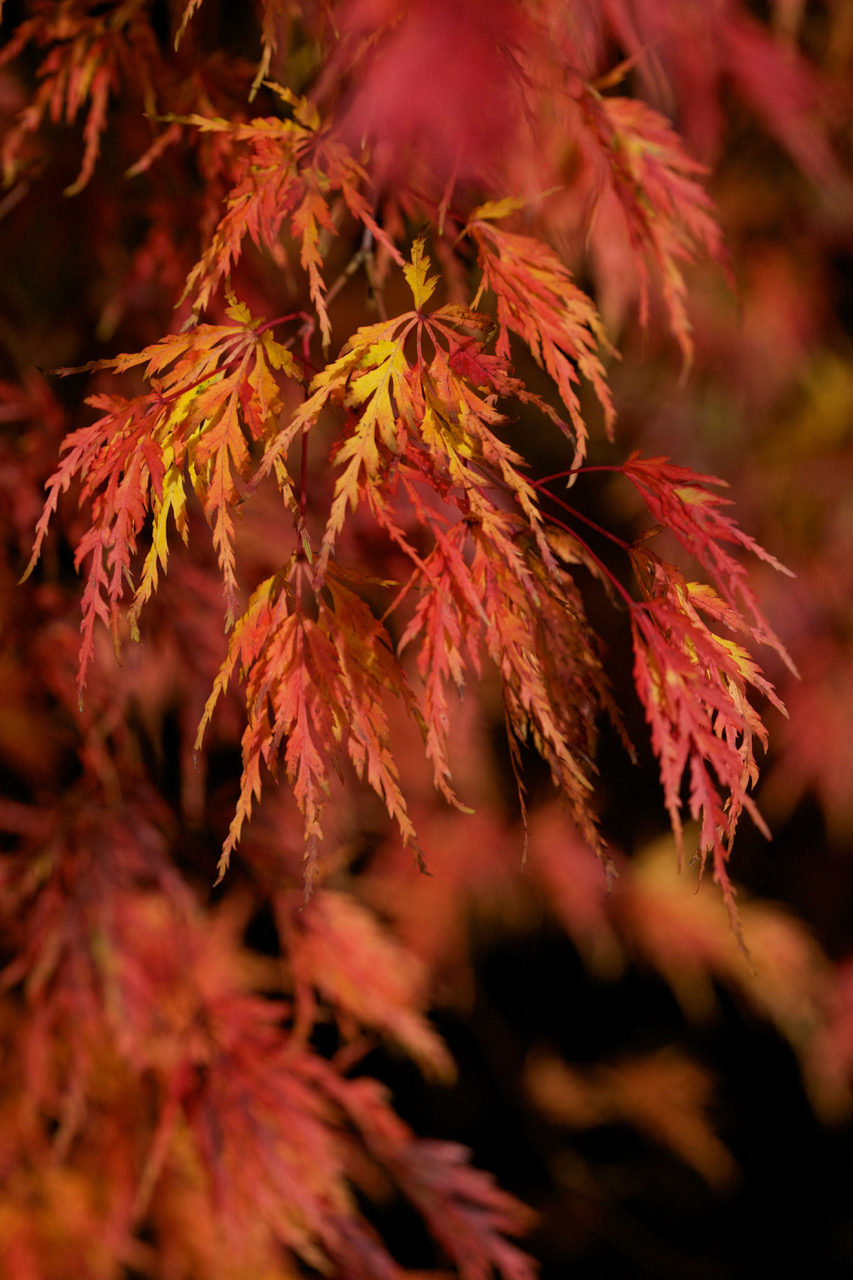
Acer palmatum dissectum ‘seiryū’ / Japanese Maple
Price range: £75.00 through £140.00
Frequently Bought Together


Description
Quick Facts
- Common Name: Seiryu Japanese Maple
- Botanical Name: Acer palmatum dissectum ‘Seiryu’
- Plant Type: Deciduous ornamental shrub / small tree
- Mature Height: 3–5m (slow-growing; smaller in pots)
- Mature Spread: 2–4m
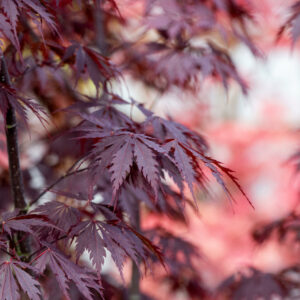
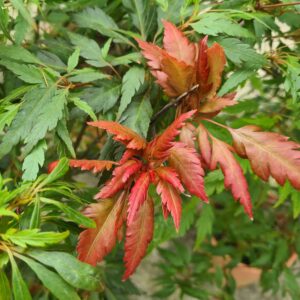
- Foliage Colour: Fresh green in spring and summer; warm gold, orange and red tones in autumn
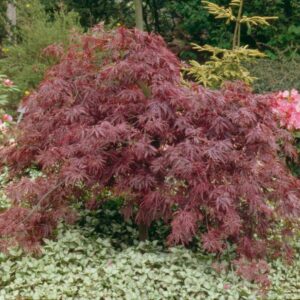
- Leaf Shape: Finely cut, laceleaf (dissected) foliage
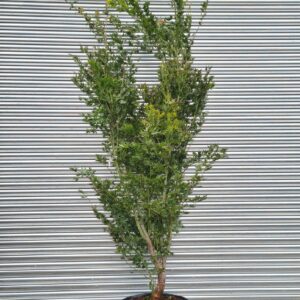
- Habit: Upright (one of the few upright laceleaf maples)
- Hardiness: RHS H6 (hardy in most UK & Ireland gardens; shelter improves performance)
- Soil Requirements: Moist, well-drained, humus-rich soil; slightly acidic to neutral
- Aspect: Part shade / dappled shade (morning sun ideal; shelter from harsh wind)
- Maintenance: Low
Description
Acer palmatum dissectum ‘Seiryu’ is a Japanese maple with a rare and beautiful twist: it has that delicate, laceleaf foliage—yet it grows with an upright, airy habit rather than the usual cascading shape. The result is a tree that feels light and elegant, with finely cut leaves that move beautifully in the breeze and create a soft, layered canopy.
In spring and summer, the foliage is a fresh, clear green that brings calm and contrast to deeper-coloured planting. Then, as the season turns, ‘Seiryu’ puts on a spectacular autumn show, shifting through warm golds and oranges into rich reds. It’s a true multi-season feature—refined, architectural, and quietly dramatic.
Plant it as a specimen where you can appreciate the detail up close, or use it to bring height and softness to a mixed border. It also performs well in a large pot, especially when you can give it shelter and consistent moisture.
Caragh Garden Notebook
Planting:
Plant in spring or autumn. Choose a sheltered position with dappled shade or gentle morning sun—this helps protect the fine foliage from wind-scorch and strong afternoon sun. Dig a generous hole and improve the soil with leaf mould or well-rotted compost. If your soil is alkaline, add ericaceous compost to help keep conditions slightly acidic. Plant at the same depth as in the pot, firm in gently, water well, and mulch to keep roots cool.
Plant in spring or autumn. Choose a sheltered position with dappled shade or gentle morning sun—this helps protect the fine foliage from wind-scorch and strong afternoon sun. Dig a generous hole and improve the soil with leaf mould or well-rotted compost. If your soil is alkaline, add ericaceous compost to help keep conditions slightly acidic. Plant at the same depth as in the pot, firm in gently, water well, and mulch to keep roots cool.
Soil Preparation:
Japanese maples love humus-rich, free-draining soil. They dislike sitting wet, but they also hate drying out. Improve heavy soil with compost and fine bark; improve sandy soil with organic matter to hold moisture. Mulch annually to conserve moisture and protect shallow roots.
Japanese maples love humus-rich, free-draining soil. They dislike sitting wet, but they also hate drying out. Improve heavy soil with compost and fine bark; improve sandy soil with organic matter to hold moisture. Mulch annually to conserve moisture and protect shallow roots.
Watering:
Water regularly in the first year, especially during dry spells. In containers, check moisture often in summer—laceleaf maples can dry out quickly in pots. Aim for consistent moisture, not extremes.
Water regularly in the first year, especially during dry spells. In containers, check moisture often in summer—laceleaf maples can dry out quickly in pots. Aim for consistent moisture, not extremes.
Seasonal Care:
Low maintenance. Prune only if needed, and do it lightly in late summer or when dormant (mid-winter), removing dead, damaged, or crossing branches. Avoid heavy pruning—its natural shape is part of the beauty.
Low maintenance. Prune only if needed, and do it lightly in late summer or when dormant (mid-winter), removing dead, damaged, or crossing branches. Avoid heavy pruning—its natural shape is part of the beauty.
Pests & Problems:
Leaf scorch is the most common issue—usually caused by wind, strong sun, or drying out. Shelter + steady moisture prevent most problems.
Leaf scorch is the most common issue—usually caused by wind, strong sun, or drying out. Shelter + steady moisture prevent most problems.
Design Notes:
A perfect specimen tree for courtyards, lawns, and mixed borders. Gorgeous with ferns, hostas, hellebores, hakonechloa (Japanese forest grass), and evergreen structure. Use it to bring “soft height” and fine texture to the garden.
A perfect specimen tree for courtyards, lawns, and mixed borders. Gorgeous with ferns, hostas, hellebores, hakonechloa (Japanese forest grass), and evergreen structure. Use it to bring “soft height” and fine texture to the garden.
Related products
-

Acer palmatum Black Lace
£195.00 Select options This product has multiple variants. The options may be chosen on the product page -
Acer palm. ‘Beni Hagoromo’
£225.00 Select options This product has multiple variants. The options may be chosen on the product page -
Acer palmatum Inaba Shidare / Japanese Maple
Price range: £250.00 through £3,150.00 Select options This product has multiple variants. The options may be chosen on the product page -
Acer palm. ‘Kogane Nishiki’
£1,050.00 Select options This product has multiple variants. The options may be chosen on the product page