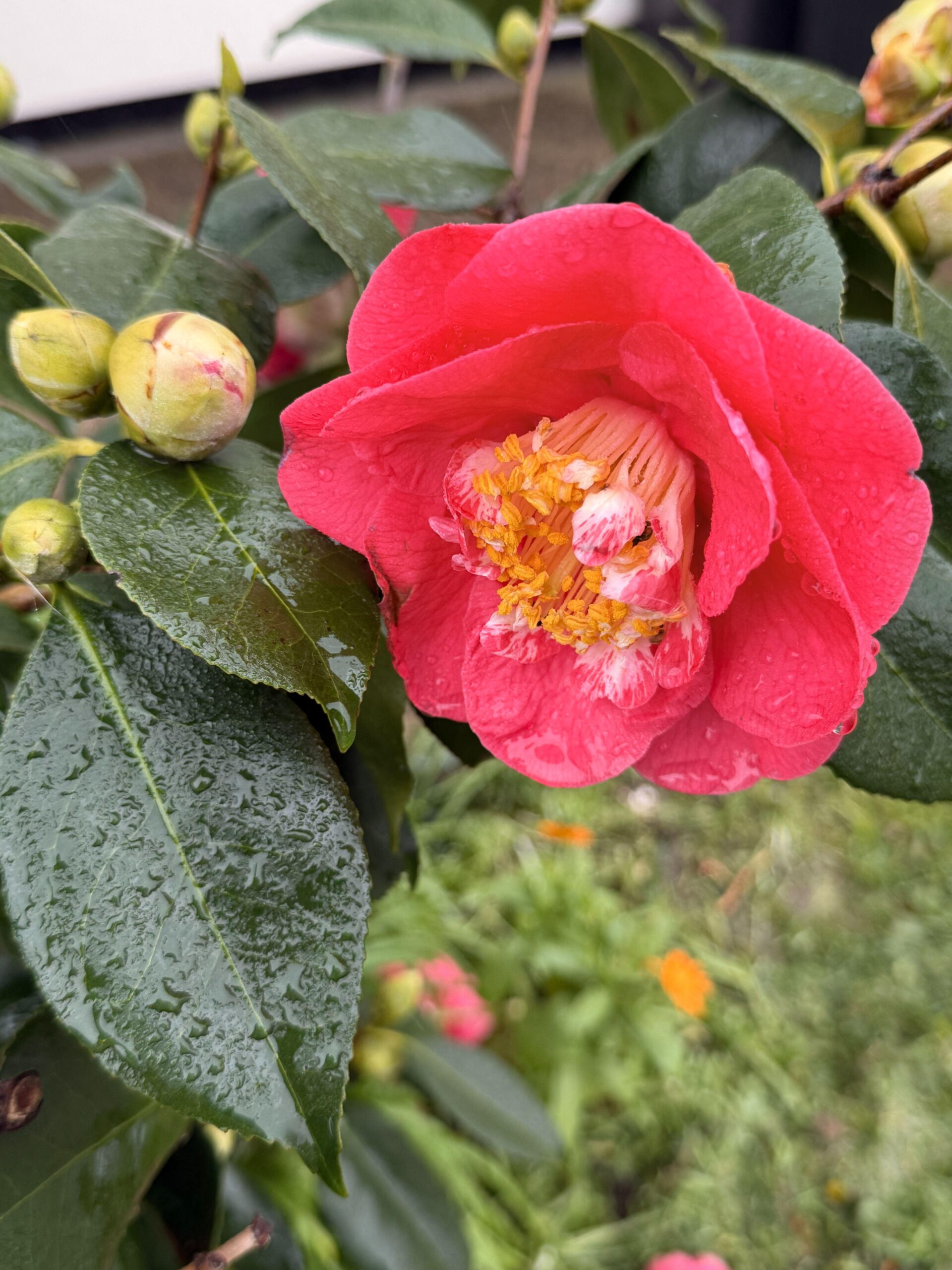
Camellia japonica ‘Dr. King’
£55.00
Frequently Bought Together

Description
Quick Facts
- Common Name: Dr King Camellia
- Botanical Name: Camellia japonica ‘Dr King’
- Plant Type: Evergreen flowering shrub
- Mature Height: 2–3m (can be kept smaller with pruning or in containers)
- Mature Spread: 1.5–2.5m
- Flowering Period: February to April
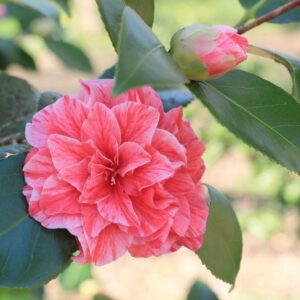
- Flower Colour: Large, semi-double to fully double, bright rose-red blooms with prominent yellow stamens
- Foliage: Glossy, dark green, leathery leaves; evergreen
- Hardiness: RHS H5 (hardy in most UK & Irish gardens; protect buds from late frosts)
- Soil Requirements: Moist, well-drained, acidic (ericaceous) soil
- Aspect: Partial shade (shelter from early morning sun and cold winds)
- Maintenance: Low to moderate (annual pruning after flowering, mulching)
Description
Camellia japonica ‘Dr King’ is an outstanding evergreen shrub, renowned for its large, showy blooms that bring a burst of colour to the garden from late winter into spring. The flowers are bright rose-red, semi-double to fully double, and often feature a dramatic cluster of golden yellow stamens at their centre—making each bloom a true focal point against the plant’s glossy, dark green foliage.
Evergreen leaves provide structure and year-round interest, serving as a lush backdrop for bulbs, ferns, and woodland companions. ‘Dr King’ is perfect for shaded borders, woodland gardens, or as a specimen in a sheltered spot where its spectacular blooms can be admired up close. It also thrives in large containers filled with ericaceous compost, making it a versatile choice for patios and courtyards.
Hardy and reliable in Irish and UK gardens, ‘Dr King’ prefers a sheltered position with dappled light and protection from harsh winds and early morning sun (which can damage frost-touched buds). With a little care, it will reward you with years of vibrant colour and evergreen beauty.
Caragh Garden Notebook
Planting:
Space plants 1.2–2m apart, depending on the effect you want. Plant container-grown specimens in spring (March–May) or early autumn (September–October). Choose a sheltered position in partial shade—avoid east-facing sites where early sun can damage frost-covered buds. Dig a generous hole and plant into ericaceous compost or improve the planting area with plenty of acidic organic matter. Plant at the same depth as in the pot, firm in gently, water well, and mulch with pine bark or leaf mould.
Space plants 1.2–2m apart, depending on the effect you want. Plant container-grown specimens in spring (March–May) or early autumn (September–October). Choose a sheltered position in partial shade—avoid east-facing sites where early sun can damage frost-covered buds. Dig a generous hole and plant into ericaceous compost or improve the planting area with plenty of acidic organic matter. Plant at the same depth as in the pot, firm in gently, water well, and mulch with pine bark or leaf mould.
Soil Preparation:
Acidic, moist but well-drained soil is essential (aim for pH 5.5–6.5). Avoid chalky or alkaline soils. Improve heavy clay with organic matter and grit to aid drainage. Mulch annually with pine bark, leaf mould, or ericaceous compost to conserve moisture and maintain acidity.
Acidic, moist but well-drained soil is essential (aim for pH 5.5–6.5). Avoid chalky or alkaline soils. Improve heavy clay with organic matter and grit to aid drainage. Mulch annually with pine bark, leaf mould, or ericaceous compost to conserve moisture and maintain acidity.
Seasonal Care:
Water during dry spells, especially in summer and when growing in containers—use rainwater if possible. Feed in spring with an ericaceous fertiliser. Prune lightly after flowering to shape and remove any dead or weak wood. Protect flower buds from late frosts (cover with fleece if needed in exposed sites).
Water during dry spells, especially in summer and when growing in containers—use rainwater if possible. Feed in spring with an ericaceous fertiliser. Prune lightly after flowering to shape and remove any dead or weak wood. Protect flower buds from late frosts (cover with fleece if needed in exposed sites).
Container Growing:
Excellent in large pots with ericaceous compost. Water regularly and feed in spring. Repot every 2–3 years to refresh soil and encourage healthy growth.
Excellent in large pots with ericaceous compost. Water regularly and feed in spring. Repot every 2–3 years to refresh soil and encourage healthy growth.
Pests & Problems:
Generally trouble-free. Watch for scale insects and camellia leaf gall. Yellowing leaves may indicate alkaline soil or hard water—switch to rainwater and ericaceous feed.
Generally trouble-free. Watch for scale insects and camellia leaf gall. Yellowing leaves may indicate alkaline soil or hard water—switch to rainwater and ericaceous feed.
Design Notes:
Perfect for woodland gardens, shaded borders, or as a specimen in a sheltered courtyard. Pairs beautifully with ferns, azaleas, and spring bulbs.
Perfect for woodland gardens, shaded borders, or as a specimen in a sheltered courtyard. Pairs beautifully with ferns, azaleas, and spring bulbs.
Related products
-

Acer dissectum Garnet / Japanese Maple
Price range: £145.00 through £950.00 Select options This product has multiple variants. The options may be chosen on the product page -
Acaena intermis Purpurea
£15.00 Select options This product has multiple variants. The options may be chosen on the product page -
Camellia japonica ‘Blood of China’
£55.00 Select options This product has multiple variants. The options may be chosen on the product page -
Acer freemanii Autumn Blaze
£350.00 Select options This product has multiple variants. The options may be chosen on the product page