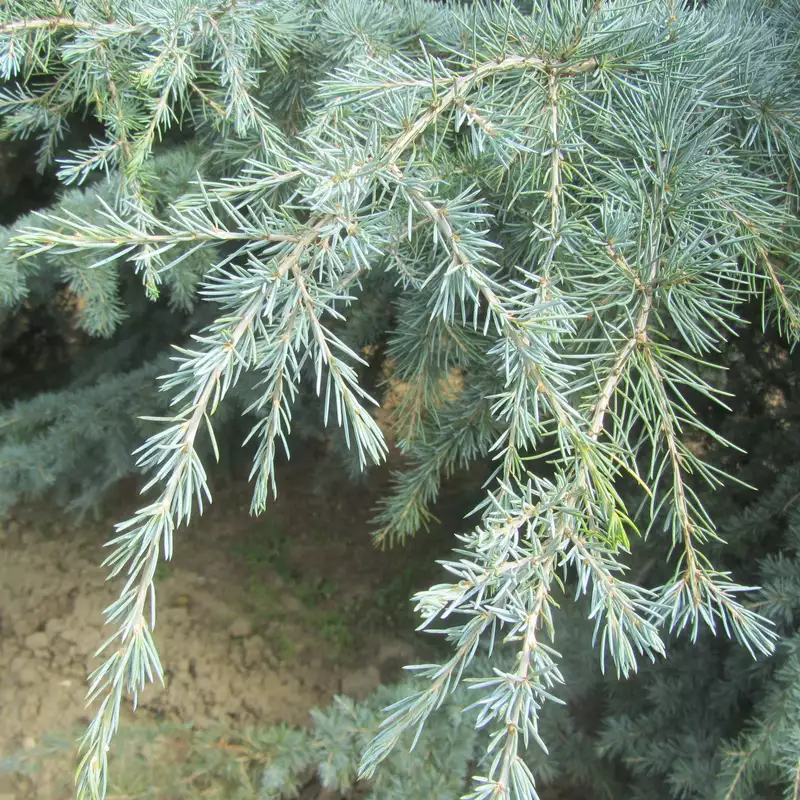
Cedrus deodara eisregen
£25.00
Frequently Bought Together


Description
Quick Facts
- Common Name: Dwarf Deodar Cedar, Eisregen Cedar
- Botanical Name: Cedrus deodara ‘Eisregen’
- Plant Type: Evergreen conifer (dwarf, compact)
- Mature Height: 1–2m (slow growing; can be smaller for many years)
- Mature Spread: 1–2m
- Foliage: Soft, needle-like foliage; blue-green to silvery-green tones
- Hardiness: RHS H6 (hardy throughout UK & Ireland)
- Soil Requirements: Well-drained soil; prefers slightly acidic to neutral
- Aspect: Full sun (best colour and shape) to partial shade
- Maintenance: Low
Description
Cedrus deodara ‘Eisregen’ is a wonderfully compact, slow-growing deodar cedar that brings all the character of a true cedar—soft needles, graceful texture, and that unmistakable evergreen presence—without the eventual scale of the species. It’s an ideal choice when you want something architectural and long-lived, but still perfectly suited to smaller gardens, courtyards, and statement containers.
The foliage is beautifully fine and soft to the touch, held in dense clusters that create a plush, textured look. Colour sits in the blue-green to silvery-green range, giving it a cool, calming feel that pairs effortlessly with grasses, heathers, and darker evergreens. As it matures, ‘Eisregen’ forms a compact, slightly irregular mound with gentle movement in the branch tips—natural, elegant, and never overly formal.
This is a plant that quietly elevates a space. Use it as a focal point in a gravel garden, as a year-round anchor in a mixed border, or as a sculptural evergreen in a large pot by an entrance. It’s hardy and reliable in Irish and UK gardens, and once established, it asks for very little—just good drainage and a sunny spot to show off its best colour.
Caragh Garden Notebook
Planting:
Space plants 1–1.5m apart to allow them to develop their natural form. Plant container-grown specimens year-round, ideally in spring (March–May) or early autumn (September–October). Choose a position in full sun for the best colour and the most compact, balanced growth. Dig a hole twice the width of the pot, loosen the surrounding soil well, and incorporate organic matter to support establishment. Plant at the same depth as in the pot, firm in gently, water thoroughly, and mulch.
Space plants 1–1.5m apart to allow them to develop their natural form. Plant container-grown specimens year-round, ideally in spring (March–May) or early autumn (September–October). Choose a position in full sun for the best colour and the most compact, balanced growth. Dig a hole twice the width of the pot, loosen the surrounding soil well, and incorporate organic matter to support establishment. Plant at the same depth as in the pot, firm in gently, water thoroughly, and mulch.
Soil Preparation:
Good drainage is essential. Cedars dislike sitting wet in winter. Prefers well-drained, moderately fertile soil, ideally slightly acidic to neutral. Improve heavy clay with grit and organic matter to aid drainage. Improve sandy soils with compost to help hold moisture (while still draining freely). Mulch annually to protect roots, conserve moisture, and improve soil structure.
Good drainage is essential. Cedars dislike sitting wet in winter. Prefers well-drained, moderately fertile soil, ideally slightly acidic to neutral. Improve heavy clay with grit and organic matter to aid drainage. Improve sandy soils with compost to help hold moisture (while still draining freely). Mulch annually to protect roots, conserve moisture, and improve soil structure.
Container Growing:
Excellent in large pots. Use a generous container with plenty of drainage holes and a free-draining compost mix (adding grit/perlite helps). Water regularly in the first year and during hot spells, but avoid keeping compost constantly wet. Top-dress in spring with fresh compost and a slow-release fertiliser suitable for conifers.
Excellent in large pots. Use a generous container with plenty of drainage holes and a free-draining compost mix (adding grit/perlite helps). Water regularly in the first year and during hot spells, but avoid keeping compost constantly wet. Top-dress in spring with fresh compost and a slow-release fertiliser suitable for conifers.
Seasonal Care:
Very low maintenance. No pruning is required to keep its natural shape. If you need to tidy, lightly trim in late spring, taking only soft new growth (avoid cutting back into old wood). Water during prolonged dry spells, especially in the first 1–2 years after planting. In very exposed sites, young plants benefit from a little shelter from drying winds.
Very low maintenance. No pruning is required to keep its natural shape. If you need to tidy, lightly trim in late spring, taking only soft new growth (avoid cutting back into old wood). Water during prolonged dry spells, especially in the first 1–2 years after planting. In very exposed sites, young plants benefit from a little shelter from drying winds.
Design Notes:
A brilliant “anchor” plant for year-round structure. Looks stunning with ornamental grasses, heathers, winter-flowering hellebores, and silver-leaved plants. Perfect for gravel gardens and modern planting schemes where texture matters as much as colour.
A brilliant “anchor” plant for year-round structure. Looks stunning with ornamental grasses, heathers, winter-flowering hellebores, and silver-leaved plants. Perfect for gravel gardens and modern planting schemes where texture matters as much as colour.
Related products
-

Escallonia Apple Blossom
£20.00 Select options This product has multiple variants. The options may be chosen on the product page -
Escallonia Pink Elle
£45.00 Select options This product has multiple variants. The options may be chosen on the product page -
Choisya ternata – Mexican Orange Blossom
Price range: £9.50 through £35.00 Select options This product has multiple variants. The options may be chosen on the product page -
Euonymus Emerald Gaiety
Price range: £8.50 through £10.00 Select options This product has multiple variants. The options may be chosen on the product page