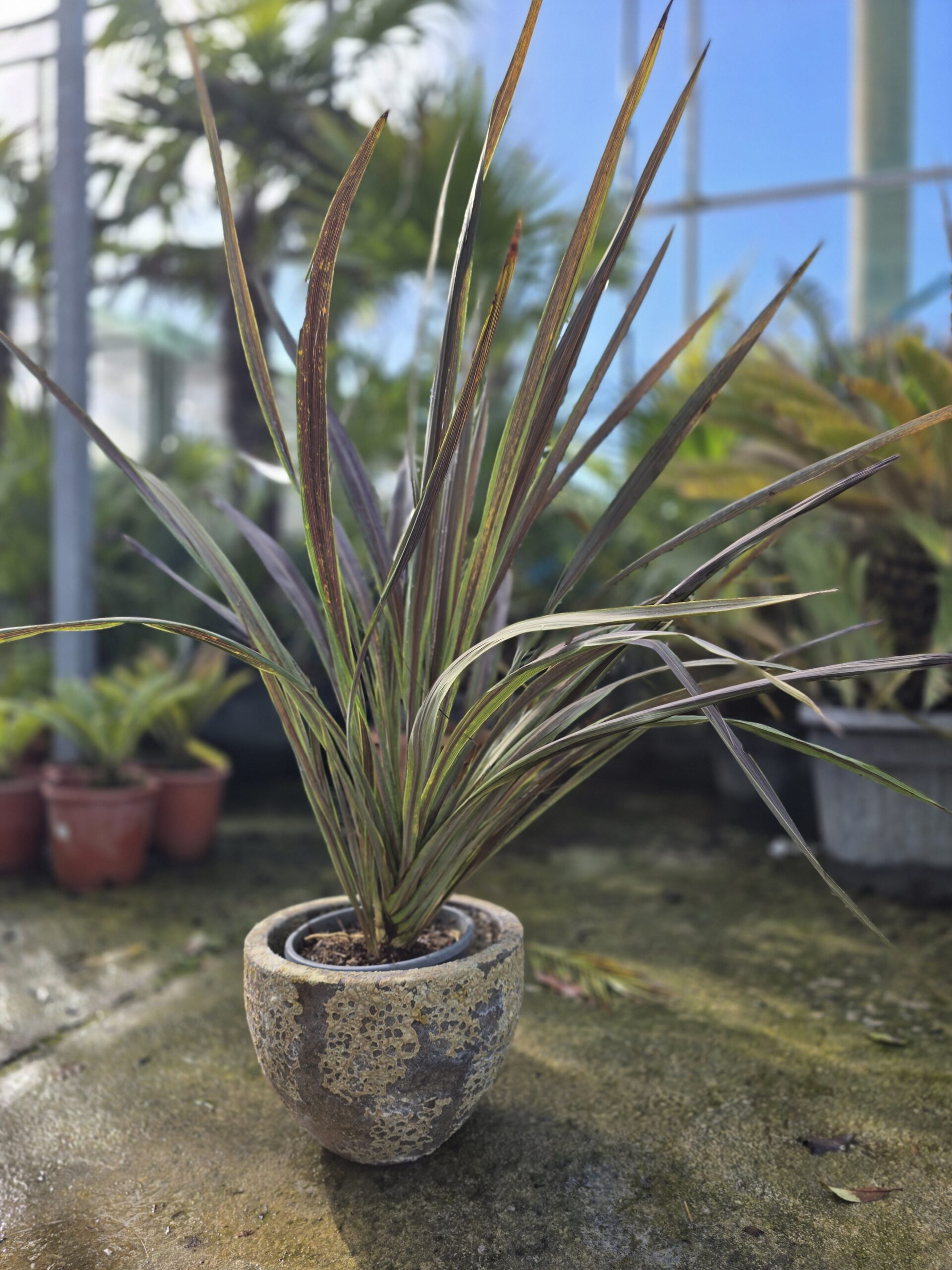
Cordyline banksii ‘Electric Star’
£45.00
Description
Quick Facts
- Common Name: Cordyline ‘Electric Star’, Cabbage Tree
- Botanical Name: Cordyline banksii ‘Electric Star’
- Plant Type: Evergreen architectural shrub
- Mature Height: 1–2m (often smaller in pots; slower in cold spots)
- Mature Spread: 60cm–1m
- Foliage Colour: Creamy-white and green striped leaves (often with a bright, “lit” look)
- Foliage Shape: Long, narrow, arching, strap-like leaves
- Hardiness: Best in mild coastal UK & Ireland; protect from hard frost and cold winds
- Soil Requirements: Well-drained soil; tolerates poorer soils once established
- Aspect: Full sun to light shade (best colour in sun with shelter)
- Maintenance: Low
Description
Cordyline banksii ‘Electric Star’ is pure garden punctuation—an evergreen burst of cream-and-green striping that instantly makes a space feel brighter, fresher, and a little more modern. Its long, arching leaves form a fountain of variegation, catching the light beautifully and lifting everything planted around it, from dark evergreens to soft grasses.
It’s an ideal choice when you want year-round structure without heaviness: architectural, but still soft at the edges. In pots, it makes a brilliant statement by the front door or on a patio; in borders, it adds height and movement, especially in gravel gardens and contemporary planting schemes.
In Irish and UK gardens, ‘Electric Star’ is happiest in a sheltered spot with free-draining soil. It will cope with wind better than you’d expect once established, but it appreciates protection from harsh, drying gusts and hard frost—particularly when young or container-grown.
Caragh Garden Notebook
Planting:
Plant in spring for the best start, especially in cooler areas. Choose a sheltered position with good light (sun or bright shade). Dig a hole and improve drainage if needed—cordylines dislike sitting wet in winter. Plant at the same depth as in the pot, firm in, water well, and mulch lightly (keeping mulch away from the stem).
Plant in spring for the best start, especially in cooler areas. Choose a sheltered position with good light (sun or bright shade). Dig a hole and improve drainage if needed—cordylines dislike sitting wet in winter. Plant at the same depth as in the pot, firm in, water well, and mulch lightly (keeping mulch away from the stem).
Soil Preparation:
Free-draining soil is key. In heavier ground, mix in grit and organic matter to improve structure. In pots, use a high-quality compost with added grit/perlite and ensure excellent drainage.
Free-draining soil is key. In heavier ground, mix in grit and organic matter to improve structure. In pots, use a high-quality compost with added grit/perlite and ensure excellent drainage.
Watering:
Water regularly in the first growing season. Once established, it’s fairly drought-tolerant, but container plants will need consistent watering in summer. Avoid waterlogging in winter.
Water regularly in the first growing season. Once established, it’s fairly drought-tolerant, but container plants will need consistent watering in summer. Avoid waterlogging in winter.
Winter Care (important):
In colder or exposed gardens, protect the crown in winter with fleece during severe cold snaps. Container plants can be moved to a sheltered spot (against a wall, under an overhang, or into an unheated greenhouse) to prevent frost damage. Good drainage is your best winter insurance.
In colder or exposed gardens, protect the crown in winter with fleece during severe cold snaps. Container plants can be moved to a sheltered spot (against a wall, under an overhang, or into an unheated greenhouse) to prevent frost damage. Good drainage is your best winter insurance.
Seasonal Care:
Remove any damaged lower leaves by gently pulling them away. If the growing point is damaged by frost, don’t panic—cordylines can reshoot from lower down once warmth returns.
Remove any damaged lower leaves by gently pulling them away. If the growing point is damaged by frost, don’t panic—cordylines can reshoot from lower down once warmth returns.
Pests & Problems:
Generally trouble-free. Watch for wind scorch and winter wet. In pots, vine weevil can occasionally be an issue—check if growth looks stressed.
Generally trouble-free. Watch for wind scorch and winter wet. In pots, vine weevil can occasionally be an issue—check if growth looks stressed.
Design Notes:
A perfect partner for grasses, hebes, pittosporum, phormiums, euphorbia, and dark-leaved shrubs. Use it to brighten gravel planting, frame an entrance, or add a “lift” to winter containers.
A perfect partner for grasses, hebes, pittosporum, phormiums, euphorbia, and dark-leaved shrubs. Use it to brighten gravel planting, frame an entrance, or add a “lift” to winter containers.
Related products
-

Buxus sempervirens / Box Oval
£500.00 Select options This product has multiple variants. The options may be chosen on the product page -
Arbutus unedo / Strawberry Tree Standard and Half Standards
Price range: £240.00 through £4,300.00 Select options This product has multiple variants. The options may be chosen on the product page -
Buxus sempervirens / Box Cones
Price range: £65.00 through £195.00 Select options This product has multiple variants. The options may be chosen on the product page -
Callistemon viminalis Hot Pink
Price range: £15.00 through £40.00 Select options This product has multiple variants. The options may be chosen on the product page