Photinia ‘Louise’ Espalier
£120.00
Frequently Bought Together


Description
Quick Facts
- Common Name: Louise Photinia (Espalier)
- Botanical Name: Photinia × fraseri ‘Louise’
- Plant Type: Evergreen shrub, trained as espalier
- Form: Espalier (metal frame)
- Mature Height: 1.8–2.5m (espaliered; can be kept smaller with pruning)
- Mature Spread: 1.2–2m (espaliered; can be kept smaller with pruning)
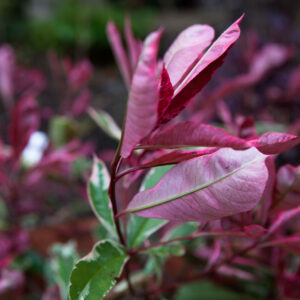
- Foliage: Narrow, lance-shaped leaves with striking cream, pink, and green variegation; new growth flushed vivid pink-red
- Flowering Period: May to June (occasionally, in mild seasons)
- Flower Colour: Clusters of small white flowers
- Hardiness: RHS H5 (hardy in most UK & Irish gardens)
- Soil Requirements: Moist, well-drained, moderately fertile; tolerates clay and chalk
- Aspect: Full sun to partial shade (best colour in sun; shelter from cold winds)
- Maintenance: Moderate (annual pruning to maintain structure)
Description
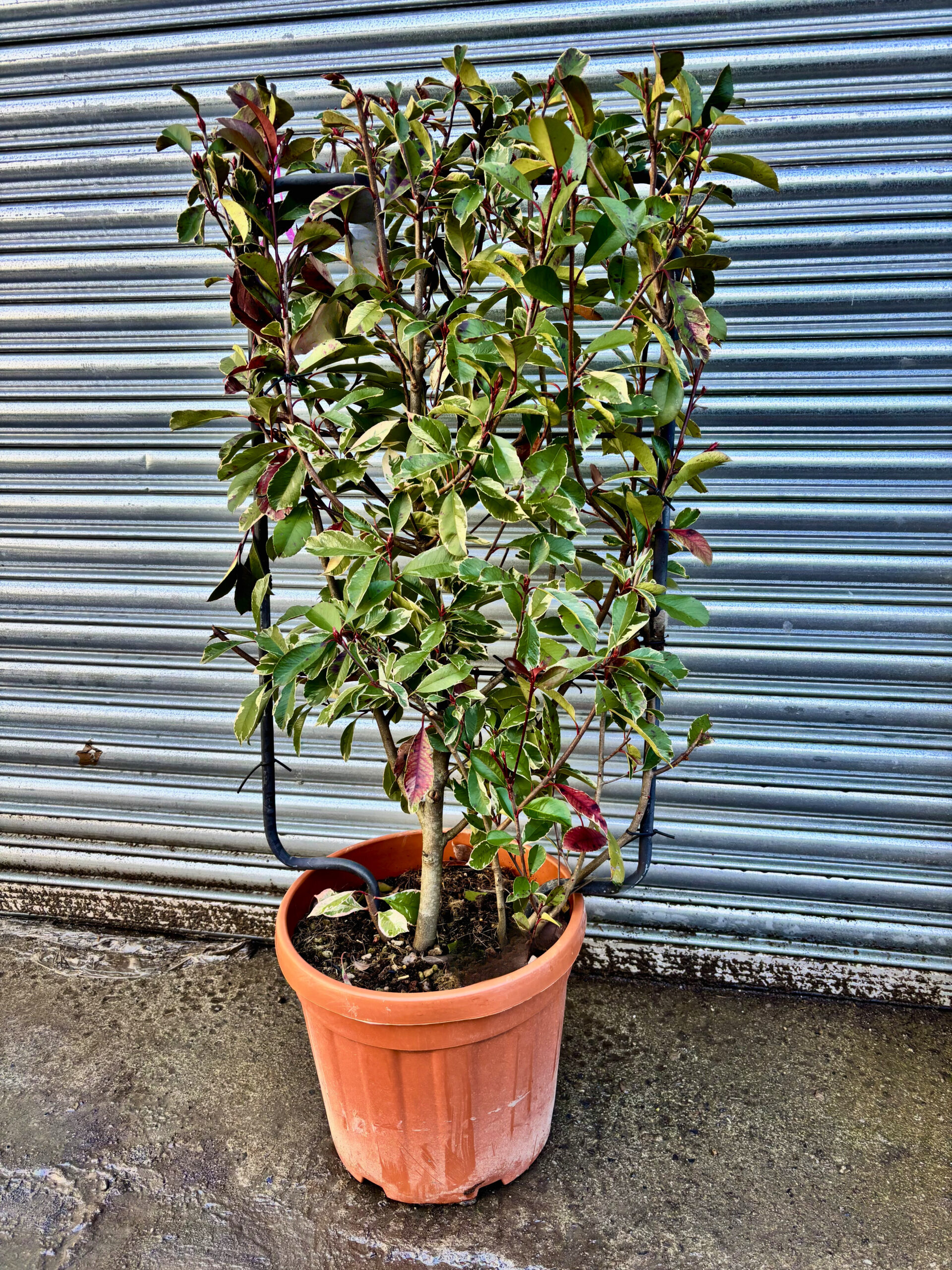
Photinia × fraseri ‘Louise’ in espalier form is a striking solution for adding colour, structure, and year-round interest to walls, fences, and screens. Trained flat against a support, ‘Louise’ creates a living panel of narrow, lance-shaped leaves boldly edged in cream and splashed with green, while new shoots emerge in vivid shades of pink and red. The combination of variegation and fresh pink growth ensures a dynamic, multi-tonal display through every season.
In late spring to early summer, mature espaliers may bear clusters of small white flowers, adding a gentle, decorative touch. The espaliered form is perfect for maximising impact in tight spaces, along boundaries, or as a vibrant backdrop for patios and borders. It’s also ideal for softening hard landscaping and creating privacy with a sense of style.
Hardy and adaptable, ‘Louise’ thrives in sun or partial shade and tolerates a range of soils, including clay and chalk. With an annual trim to keep the tiers neat and encourage colourful new growth, it remains low maintenance and rewarding year after year.
Caragh Garden Notebook
Planting:
Space espaliers flush against one another for a continuous screen or use singly as a feature. Plant container-grown specimens in spring (March–May) or early autumn (September–October). Choose a sunny, sheltered wall or fence for the brightest leaf colour and best growth. Dig a generous hole, loosen the soil well, and incorporate compost or well-rotted manure to support establishment. Plant at the same depth as in the pot, firm in gently, water thoroughly, and mulch.
Space espaliers flush against one another for a continuous screen or use singly as a feature. Plant container-grown specimens in spring (March–May) or early autumn (September–October). Choose a sunny, sheltered wall or fence for the brightest leaf colour and best growth. Dig a generous hole, loosen the soil well, and incorporate compost or well-rotted manure to support establishment. Plant at the same depth as in the pot, firm in gently, water thoroughly, and mulch.
Soil Preparation:
Prefers moist, well-drained, moderately fertile soil but is adaptable to clay and chalk. Avoid waterlogged ground. Improve heavy soils with compost and grit to aid drainage. Mulch annually to feed the soil and conserve moisture.
Prefers moist, well-drained, moderately fertile soil but is adaptable to clay and chalk. Avoid waterlogged ground. Improve heavy soils with compost and grit to aid drainage. Mulch annually to feed the soil and conserve moisture.
Espalier Care & Pruning:
Prune lightly after flowering or in summer to maintain the flat, tiered structure and encourage fresh, colourful growth. Tie in new shoots as needed to horizontal supports or wires. Remove any reverted (plain green) shoots promptly to preserve the variegation.
Prune lightly after flowering or in summer to maintain the flat, tiered structure and encourage fresh, colourful growth. Tie in new shoots as needed to horizontal supports or wires. Remove any reverted (plain green) shoots promptly to preserve the variegation.
Seasonal Care:
Water during prolonged dry spells, especially in the first year or for plants in containers. Feed in spring with a balanced fertiliser to support healthy growth and vibrant colour.
Water during prolonged dry spells, especially in the first year or for plants in containers. Feed in spring with a balanced fertiliser to support healthy growth and vibrant colour.
Pests & Problems:
Generally trouble-free. Occasionally watch for leaf spot or aphids, particularly on young shoots. Good airflow and regular monitoring help prevent issues.
Generally trouble-free. Occasionally watch for leaf spot or aphids, particularly on young shoots. Good airflow and regular monitoring help prevent issues.
Design Notes:
Superb for brightening walls, fences, and narrow spaces. The colourful foliage pairs beautifully with other evergreens, ornamental grasses, and flowering perennials. Use as a living backdrop, privacy screen, or statement feature in both contemporary and traditional gardens.
Superb for brightening walls, fences, and narrow spaces. The colourful foliage pairs beautifully with other evergreens, ornamental grasses, and flowering perennials. Use as a living backdrop, privacy screen, or statement feature in both contemporary and traditional gardens.
Related products
-

Photinia Red Robin 3/4 Standard Espalier
Price range: £450.00 through £475.00 Select options This product has multiple variants. The options may be chosen on the product page -

Photinia Red Robin Cones
Price range: £360.00 through £575.00 Select options This product has multiple variants. The options may be chosen on the product page -
Photinia Pink Marble – 1/2 Standard
£225.00 Select options This product has multiple variants. The options may be chosen on the product page -
Photinia Pink Marble – Standard Trees
£600.00 Select options This product has multiple variants. The options may be chosen on the product page