Prunus triloba ‘Rosenmund’
£180.00
Description
Quick Facts
- Common Name: Flowering Almond ‘Rosenmund’
- Botanical Name: Prunus triloba ‘Rosenmund’
- Plant Type: Deciduous flowering shrub
- Mature Height: 2–3m
- Mature Spread: 1.5–2.5m
- Flowering Period: April to May
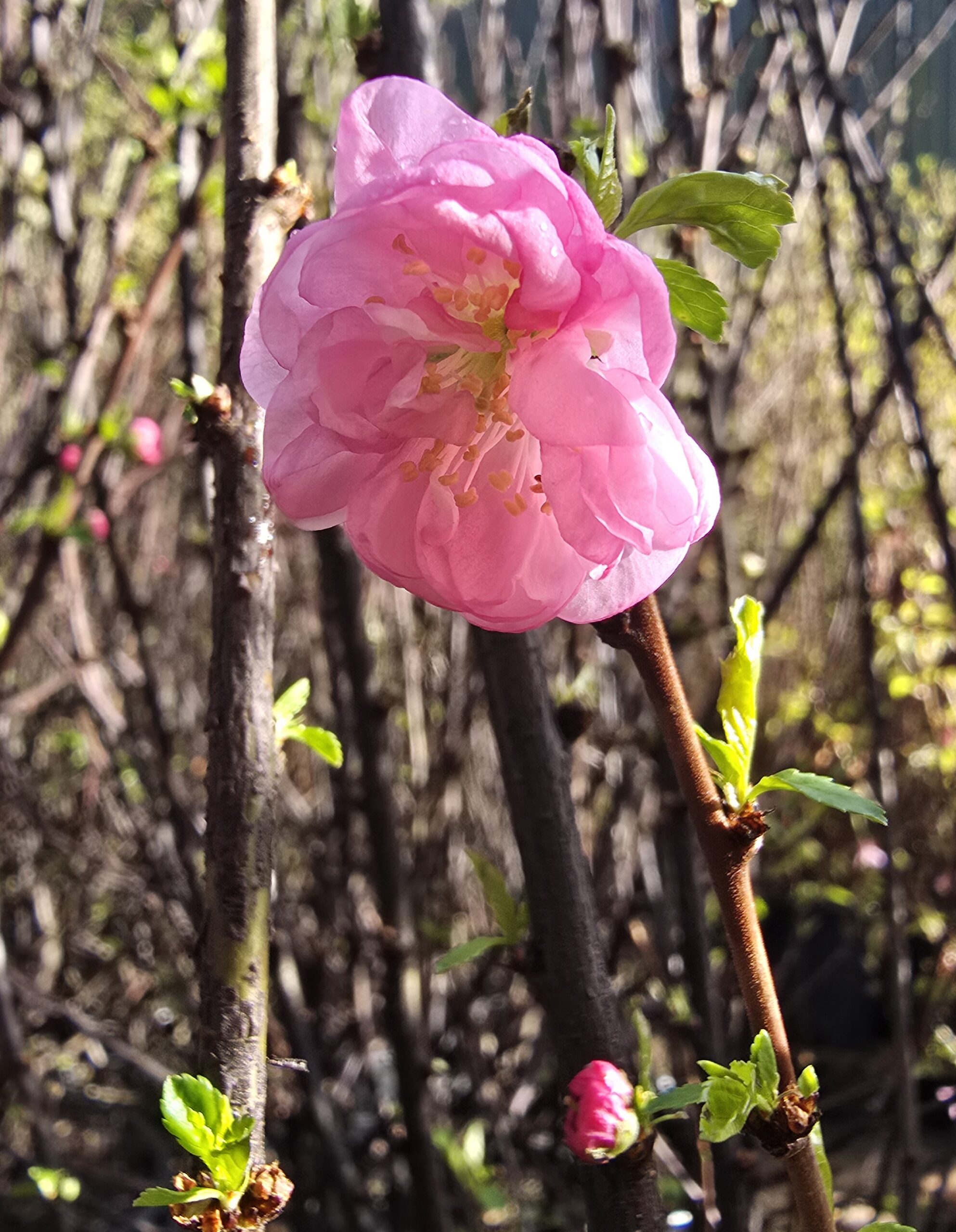
- Flower Colour: Soft pink, fully double blooms in clusters along the stems
- Foliage: Mid-green leaves emerging after flowering
- Hardiness: RHS H6 (hardy throughout UK & Ireland)
- Soil Requirements: Moist, well-drained, moderately fertile soil
- Aspect: Full sun to light shade (best flowering in sun)
- Maintenance: Low–moderate (prune after flowering for best bloom)
Description
Prunus triloba ‘Rosenmund’ is one of those shrubs that makes spring feel like an event. In April and May, bare branches are smothered in soft pink, fully double flowers—little rosettes held in clusters all along the stems—creating a frothy, blossom-heavy display that stops people in their tracks.
As a shrub, it has a naturally upright, lightly arching habit that sits beautifully in mixed borders. It gives you that classic “blossom moment” without the space commitment of a larger tree, and it pairs effortlessly with spring bulbs and early perennials for a layered, romantic look. Once the flowers fade, fresh green leaves appear, leaving you with a tidy, leafy shrub for the rest of the season.
Hardy and easy to grow, ‘Rosenmund’ is happiest in a sunny spot with moist, well-drained soil. The one secret to keeping it flowering year after year is simple: prune it straight after it blooms.
Caragh Garden Notebook
Planting:
Plant in autumn or spring. Choose a sunny, sheltered spot for the best blossom display. Dig a generous hole, loosen the soil well, and mix in compost to help with establishment. Plant at the same depth as in the pot, firm in gently, water well, and mulch to conserve moisture.
Plant in autumn or spring. Choose a sunny, sheltered spot for the best blossom display. Dig a generous hole, loosen the soil well, and mix in compost to help with establishment. Plant at the same depth as in the pot, firm in gently, water well, and mulch to conserve moisture.
Soil Preparation:
Prefers moist, well-drained soil. It will tolerate most garden soils, but avoid waterlogged ground. Improve heavy clay with compost and a little grit to help drainage.
Prefers moist, well-drained soil. It will tolerate most garden soils, but avoid waterlogged ground. Improve heavy clay with compost and a little grit to help drainage.
Pruning (the key to more flowers):
Prune straight after flowering. ‘Rosenmund’ blooms best on young wood, so this is what keeps it full of blossom.
Prune straight after flowering. ‘Rosenmund’ blooms best on young wood, so this is what keeps it full of blossom.
- Remove dead, damaged, or crossing stems.
- Cut back some of the flowered shoots to a strong new bud or side shoot.
- On older shrubs, remove a few of the oldest stems at the base to encourage fresh growth.
Watering:
Water regularly in the first year, especially in dry spells. Once established it’s fairly resilient, but it will flower best if it doesn’t dry out completely in spring.
Water regularly in the first year, especially in dry spells. Once established it’s fairly resilient, but it will flower best if it doesn’t dry out completely in spring.
Pests & Problems:
Generally trouble-free. As with many Prunus, keep an eye out for aphids on soft new growth. Good airflow and prompt removal of any damaged stems helps keep plants healthy.
Generally trouble-free. As with many Prunus, keep an eye out for aphids on soft new growth. Good airflow and prompt removal of any damaged stems helps keep plants healthy.
Design Notes:
A perfect shrub for mixed borders and spring-focused planting. Underplant with tulips, narcissus, forget-me-nots, and early perennials for a layered spring moment. Lovely near a path where you’ll catch the blossom up close.
A perfect shrub for mixed borders and spring-focused planting. Underplant with tulips, narcissus, forget-me-nots, and early perennials for a layered spring moment. Lovely near a path where you’ll catch the blossom up close.
Additional information
| Pot Size |
|---|
Related products
-

Abies nordmanniana / Nordmann Fir
Price range: £350.00 through £450.00 Select options This product has multiple variants. The options may be chosen on the product page -
Acer palm. ‘Crimson Queen’
£225.00 Select options This product has multiple variants. The options may be chosen on the product page -
Acer dissectum Emerald Lace
Price range: £195.00 through £385.00 Select options This product has multiple variants. The options may be chosen on the product page -
Abies veitchii Umbrella Form
£1,950.00 Select options This product has multiple variants. The options may be chosen on the product page